
Transfer Pricing UK Guide | International Tax Compliance

  • Home
  • Transfer Pricing UK Guide | International Tax Compliance
Image

As businesses expand across borders, it becomes increasingly common for companies within the same group to buy and sell goods, provide services or make loans to one another.

While these transactions may seem straightforward, HMRC has strict rules to ensure they are carried out on a fair commercial basis.

These rules are known as transfer pricing.

Transfer pricing is designed to prevent profits from being artificially shifted between countries and to ensure businesses pay the correct amount of tax where economic activity takes place.

If your business operates internationally, understanding these rules is essential.

What Is Transfer Pricing?

Transfer pricing refers to the prices charged between connected or associated companies in different countries.

Examples include:

  • Selling goods between group companies.
  • Charging management or consultancy fees.
  • Licensing intellectual property.
  • Charging interest on loans.
  • Providing shared services.
  • Selling or transferring business assets.

HMRC expects these transactions to follow the Arm’s Length Principle, meaning the prices should be the same as those that would have been agreed between independent businesses dealing under comparable circumstances.

Why Does Transfer Pricing Matter?

Transfer pricing rules exist to ensure that profits are reported and taxed in the appropriate jurisdiction.

They help to:

  • Prevent artificial profit shifting.
  • Promote fair taxation between countries.
  • Reduce the risk of tax avoidance.
  • Support international tax transparency.
  • Provide greater certainty for multinational businesses.

Failure to comply can lead to enquiries, tax adjustments, interest charges and, in some cases, penalties.
Example of Transfer Pricing

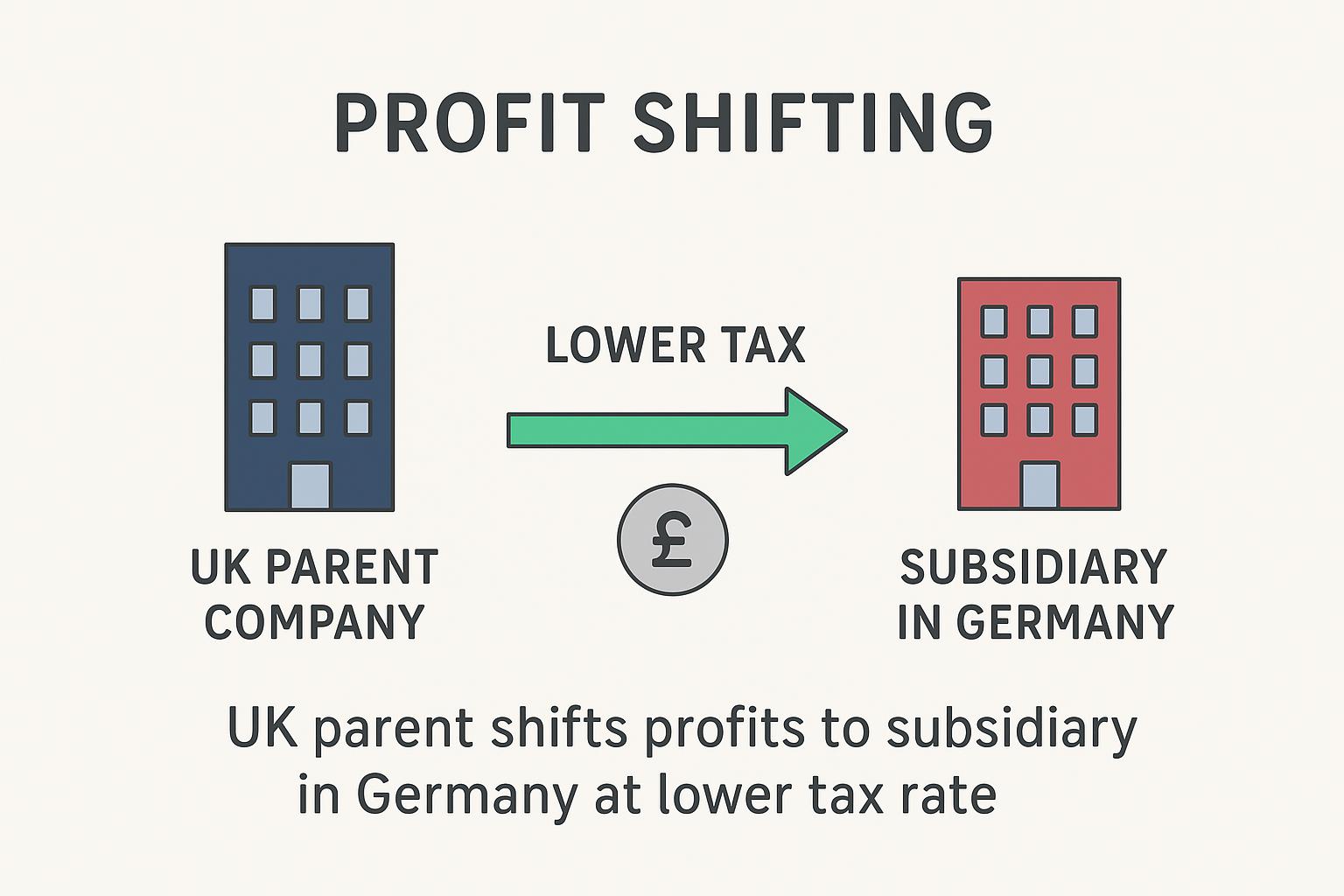
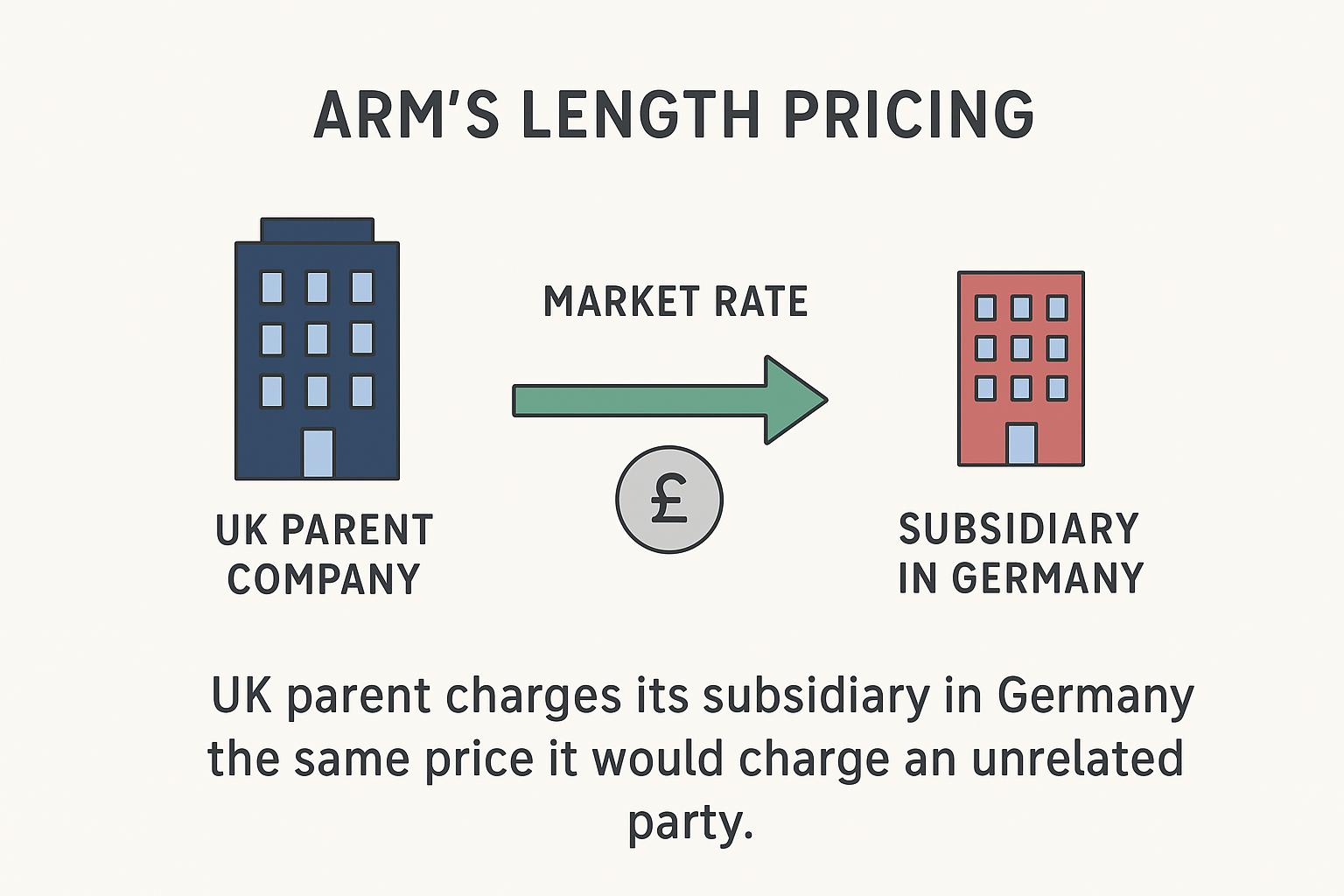
Imagine a UK parent company manufactures products and sells them to its subsidiary in Germany.

If the UK company charges a price that reflects what it would charge an independent customer in similar circumstances—and can support that pricing with appropriate evidence—the transaction is more likely to satisfy the arm’s length principle.

However, if the UK company deliberately undercharges its German subsidiary to shift profits outside the UK, HMRC may adjust the taxable profits and assess additional Corporation Tax where appropriate.

Does Every Business Need to Follow Transfer Pricing Rules?

Not necessarily.

Although UK transfer pricing legislation applies broadly to transactions between connected parties, many small and medium-sized enterprises (SMEs) may benefit from exemptions, provided certain conditions are met.

However, exemptions do not apply in every situation, and some businesses may still need to consider transfer pricing rules depending on the nature of their transactions and the countries involved.

Professional advice is recommended if your business has overseas related-party transactions.

What Documentation Should Businesses Keep?

Good documentation is a key part of transfer pricing compliance.

Businesses should retain records that explain:

  • How prices were determined.
  • Comparable market data where available.
  • The commercial purpose of transactions.
  • Agreements between group companies.
  • Financial calculations supporting the pricing.
  • Any transfer pricing reports prepared.

Maintaining appropriate documentation can help demonstrate compliance if HMRC reviews your arrangements.

Common Transactions That May Be Reviewed

Transfer pricing rules can apply to a wide range of cross-border transactions, including:

  • Sales of goods.
  • Management service charges.
  • Royalty payments.
  • Intercompany loans.
  • Intellectual property licences.
  • Shared administrative services.
  • Business restructurings.

Each transaction should be reviewed individually to determine whether the pricing reflects commercial market conditions.

How Business Management Consultation Can Help

International tax rules can be complex, particularly for growing businesses with overseas operations.

At Business Management Consultation, we can help you:

  • Review whether transfer pricing rules apply to your business.
  • Assess available exemptions.
  • Review your group structure.
  • Advise on arm’s length pricing.
  • Prepare or review transfer pricing documentation.
  • Support HMRC enquiries.
  • Provide ongoing international tax advice.

Whether your business is expanding overseas or already operates internationally, we can help you manage your transfer pricing obligations with confidence.

Conclusion

Transfer pricing is a key part of international tax compliance for businesses operating across borders.

Ensuring that transactions between connected companies are priced on an arm’s length basis helps reduce the risk of tax adjustments, penalties and disputes with HMRC.

Although many SMEs may qualify for exemptions, every international group should review its position carefully to ensure compliance with UK tax legislation.

If your business has overseas group companies or cross-border transactions, obtaining professional advice can help protect your business as it grows internationally.

Call us today on 01273 777 333 to arrange your free consultation.

Leave a comment

WhatsApp