Many business owners have noticed a common trend over recent years—products are getting smaller while prices remain the same or even increase.
A chocolate bar that was once 200g may now be 180g. A two-litre bottle of a household product may quietly reduce to 1.75 litres, yet the price stays unchanged.
This phenomenon is known as shrinkflation.
While consumers receive less for their money, businesses can also face increasing costs that affect profitability, pricing and cash flow.
Understanding shrinkflation and responding appropriately can help protect your business from unnecessary financial pressure.
What Is Shrinkflation?
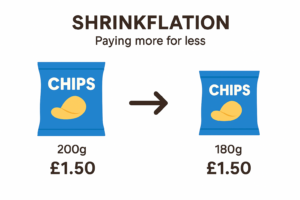
Shrinkflation occurs when manufacturers reduce the size, weight or quantity of a product while keeping the selling price the same—or increasing it.
Rather than raising prices directly, businesses reduce the amount of product being sold.
Examples include:
- A 200g packet of biscuits reduced to 180g.
- A two-litre bottle reduced to 1.75 litres.
- Fewer items included in a multi-pack.
- Smaller portion sizes without a reduction in price.
Although the price may appear unchanged, the cost per gram, litre or unit has increased.
Why Does Shrinkflation Happen?
Manufacturers face many of the same cost pressures as other businesses, including:
- Rising raw material costs.
- Higher energy prices.
- Increased transport and distribution costs.
- Wage inflation.
- Supply chain disruption.
Rather than increasing retail prices significantly, some manufacturers choose to reduce product sizes to help manage these rising costs.
How Can Shrinkflation Affect Your Business?
Shrinkflation can have a significant impact on businesses, particularly those operating in hospitality, retail, catering and food services.
Common effects include:
Higher Cost of Sales
If product sizes reduce while customer demand remains the same, you may need to purchase more units over time to provide the same quantity of goods or ingredients.
This increases your overall purchasing costs.
Reduced Profit Margins
Businesses often face a difficult choice:
- Absorb the increased cost.
- Increase selling prices.
- Accept lower profit margins.
Without regular pricing reviews, profitability can gradually decline.
Cash Flow Pressure
Higher purchasing costs and more frequent stock replenishment can increase the amount of working capital tied up in inventory.
This can place additional strain on cash flow, particularly for small businesses.
How Can You Protect Your Business?
Although shrinkflation is outside your control, there are several practical steps you can take to minimise its impact.
Review Supplier Pricing
Regularly review supplier prices, pack sizes and product specifications to identify changes as early as possible.
Comparing suppliers can also help ensure you continue to receive competitive value.
Review Your Selling Prices
Review your pricing strategy regularly to ensure it reflects increases in your own costs.
Small pricing adjustments made gradually are often easier for customers to accept than large increases introduced later.
Consider Alternative Suppliers
Exploring different suppliers or purchasing larger quantities where appropriate may help improve value for money.
However, businesses should balance any savings against storage capacity, cash flow and product shelf life.
Monitor Your Gross Profit Margins
Regular management accounts can help identify declining profit margins before they become a significant problem.
Monitoring your financial performance allows you to respond quickly when costs begin to increase.
Why Good Financial Planning Matters
Periods of rising costs make accurate financial information more valuable than ever.
Regular budgeting, cash flow forecasting and management reporting can help businesses:
- Anticipate future cost increases.
- Maintain healthy profit margins.
- Improve pricing decisions.
- Manage stock more effectively.
- Protect long-term profitability.
Businesses that monitor their finances closely are generally better placed to respond to changing market conditions.
How Business Management Consultation Can Help
At Business Management Consultation, we help businesses understand the financial impact of rising costs and develop practical strategies to remain profitable.
Our services include:
- Management accounts.
- Cash flow forecasting.
- Pricing and profitability analysis.
- Business advisory services.
- Budget preparation.
- Financial planning.
- Tax planning.
- Business growth advice.
We work with businesses across a wide range of industries, helping them make informed financial decisions in an increasingly challenging economic environment.
Conclusion
Shrinkflation is becoming increasingly common across many industries and can have a significant impact on both consumers and businesses.
By understanding how smaller product sizes affect your costs, reviewing your pricing strategy and monitoring your financial performance, you can reduce the impact on your business and protect your profitability.
Regular financial reviews and proactive planning can help ensure your business remains resilient, even during periods of rising costs.
Call us today on 01273 777 333 to discuss how we can help you strengthen your business finances and plan for rising costs.






Leave a comment